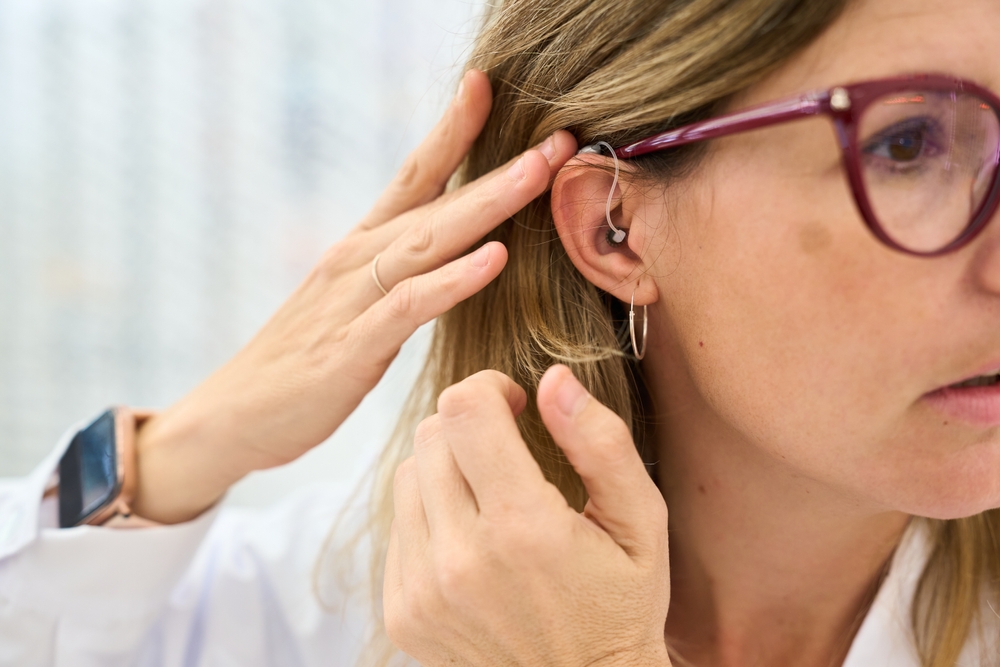
A primary reason individuals put off addressing auditory deficits is the assumption that assistive devices will be unsightly or awkward to wear. In past generations, primitive auditory devices were heavy, highly visible, and frequently viewed as an embarrassing marker of advanced age. In various scenarios, patients expressed fear that wearing an obvious device would cause peers to omit them from casual conversations due to perceived listening limitations.
Consequently, this outdated, negative stereotype persists, preventing numerous individuals from seeking professional care. The liberating truth is that twenty-first-century auditory tech offers a level of cosmetic elegance and physical comfort that surprises most patients. Ongoing innovations in cosmetic engineering mean today’s options are ultra-small, seamlessly comfortable, and beautifully hidden from public view.
If you have spent years avoiding an audiologist due to the appearance of old devices, now is the perfect moment to explore today’s sleek alternatives!
Why the Bulky, Obvious Hearing Aid Is a Thing of the Past
If you close your eyes and picture a hearing aid, you might imagine something large, hooked over the ear, and visible from across the room. If that description matches your mental model, your perceptions are anchored in the primitive analog technology of the late twentieth century.
Over the last few generations, this medical technology category has experienced a total structural evolution. Continuous refinements in ergonomic styling, nanometer-scale circuitry, and digital audio engineering have radically overhauled the modern cosmetic profile. They’re smaller, sleeker, and designed to blend in (or disappear entirely).
Many of today’s devices sit fully inside the ear canal, making them virtually invisible during everyday conversation. Different configurations sit comfortably behind the ear but feature such a low profile and featherweight build that observers naturally miss them.
A Taxonomy of Modern Styles: From Totally Hidden to Ultra-Streamlined
If you’re wondering what your main options in hearing aids actually look like, here’s a simple breakdown:
Invisible-in-Canal (IIC) Technology
This specific configuration offers the highest degree of user discretion. An IIC device is positioned entirely past the second bend of the auditory canal, fabricated from a personalized physical matrix of your unique anatomy. During typical face-to-face communication, these custom models remain completely obscured from view. They’re a popular choice for people with mild to moderate hearing loss who prioritize subtlety.
Receiver-in-canal (RIC) / Receiver-in-the-ear (RITE)
This architecture stands as the most frequently prescribed configuration in modern clinical practice. A microscopic electronic hub is positioned behind the outer ear, anchored by an ultra-thin, transparent lead to a high-fidelity speaker seated inside the canal. To onlookers, this streamlined design closely mirrors fashionable consumer electronics or sports earbuds. Unless an individual is specifically searching for the device, it remains completely unnoticed during normal interactions.
Power and Performance: Behind-the-Ear (BTE)
While these models house all electronic components within a casing resting behind the pinna, their dimensions are drastically reduced compared to legacy models. Clinically indicated for profound or severe hearing deficits, they deliver immense acoustic power without the outdated, conspicuous mass of the past.
The bottom line is simple: modern assistive hearing systems are crafted to serve your life quietly, not to draw attention to your ears.
How Current Hearing Technology Outperforms Traditional Amplifiers
It is vital to recognize that this technological revolution is not simply a visual upgrade. Contemporary devices are essentially miniature smart hubs rather than historical medical hardware. Many connect directly to your phone via Bluetooth, letting you stream calls, music, or even TV audio straight to your ears with no headphones needed.
Equipped with dedicated smartphone applications, they allow users to manipulate volume matrices or toggle environmental programs without making manual physical adjustments. Say you’re walking into a noisy restaurant: You can fine-tune your hearing to match the environment in seconds. Convenient overnight charging systems have permanently replaced the tiny disposable batteries that patients traditionally struggled to replace. Just place them on a charger overnight, like your phone.
Getting Over the Fear and Stigma of Hearing Devices
Despite being aware of these massive design improvements, it is entirely normal to feel a sense of hesitation. Acknowledging a sensory deficit and investigating rehabilitation options often forces a difficult confrontation with our own vulnerability and bodily changes. This realization can occasionally induce feelings of helplessness, leaving patients feeling detached from their own physical autonomy.
However, an alternative, empowering framework exists: utilizing hearing technology is never an indicator of structural failure. Rather, they represent a proactive response to natural biological evolution—a transition shared by every human being. Adopting this tech is definitive proof that you are actively taking charge of your health to empower and protect your daily cognitive function.
Picture yourself wearing an ultra-low-profile, virtually invisible instrument that allows you to effortlessly decode rapid speech, thrive in complex soundscapes, and re-engage with your favorite hobbies. That level of sensory restoration is incredibly liberating!
See For Yourself What Today’s Hearing Aids Look Like
The most effective method to permanently banish an obsolete stereotype is to personally examine current clinical options. We invite you to come in, ask questions, and explore your options with no pressure and no commitment necessary. View this consultation simply as a tactile opportunity to discover just how radically changed this technology has truly become.
Almost every visitor walks out completely shocked by how weightless, ergonomic, and cosmetically invisible these tools are in practice! Call our office to schedule your visit online today.