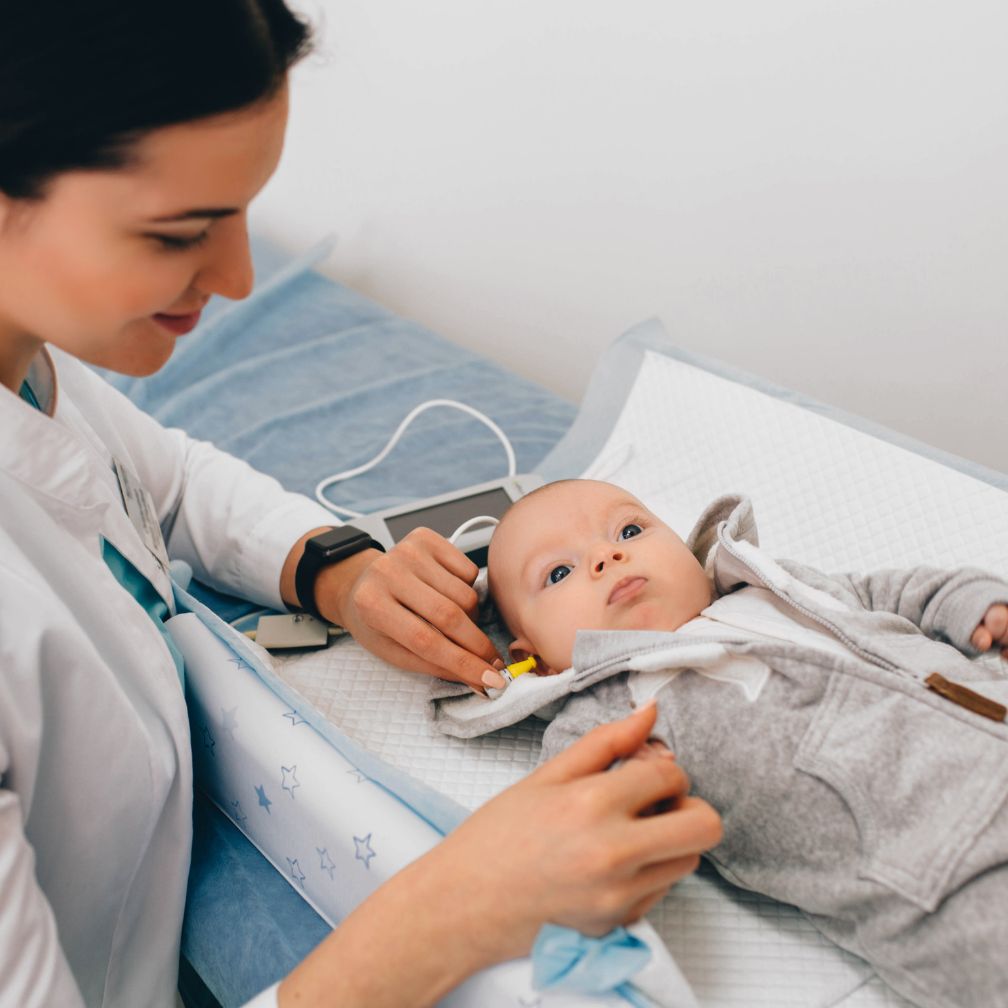
For first-time parents, learning that their baby shows hearing challenges routinely triggers immense shock and distress. But the good news is: with early detection and intervention, babies with hearing loss can genuinely thrive over time. Without question, these babies can construct spoken language, interpersonal skills, and solid relationships across their world, shaping a truly wonderful life!
Pairing pediatric hearing aids with cochlear implant systems provides two remarkable clinical tools for assisting infants with hearing deficits. Below, we take a look at their exact mechanics and how to determine which option is right for your child.
Analyzing Infant Auditory Deficits
Hearing deficits among babies can originate from an array of medical influences, including:
- Spontaneous genetic mutations (even within bloodlines having no history of impairment)
- Congenital infections including cytomegalovirus (CMV) or rubella
- Critical labor complications, featuring perinatal hypoxia or early delivery
- Certain medications used in neonatal intensive care
The most important step? Swift diagnostic evaluation. Consequently, newborns across United States medical centers receive official hearing checks before returning home. Pediatric audiology specialists adhere strictly to the official “1-3-6” operational timeline:
- Preliminary auditory screening conducted before 30 days of age
- Confirmed hearing diagnosis finalized prior to 3 months post-birth
- Specialized treatment (incorporating clinical devices or speech therapy) initiated prior to 6 months post-birth
Reaching these early milestones provides infants the best chance for healthy speech, language, and brain development. If you need guidance on these screenings, your pediatrician will be happy to help!
Hearing Aids for Infants
In supporting babies who exhibit mild to severe hearing deficits, wearable hearing aids frequently serve as the frontline therapeutic choice. These compact, body-worn units elevate acoustic volume, helping babies hear speech and environmental sounds more clearly.
Dedicated pediatric-grade hearing devices represent:
- Fully safe for pediatric application in infants aged just a few weeks
- Manufactured with soft, flexible ear impressions that change alongside early child development
- Outfitted with child-resistant battery compartments and specialized pediatric safety components
- Custom-calibrated by a pediatric hearing practitioner to target your child’s distinct hearing prescription
While your infant develops, wearable units demand periodic adjustments to ensure proper fit and effectiveness.
Cochlear Implants for Infants
Should an infant present with profound to severe sensorineural hearing impairment and demonstrates limited success with standard amplification, a cochlear implant may be advised. Unlike standard acoustic hearing aids, cochlear implant devices:
- Are fitted directly inside the inner ear via surgery bypassing non-functional outer hair cells
- Successfully bypass non-working zones in the cochlea
- Transform ambient sound into direct electrical pulses that stimulate the auditory nerve directly
Cochlear implants are:
- Officially FDA-approved for use in infants as young as 9 to 12 months
- Highly successful when combined with early auditory-verbal therapy and strong home support
- Prescribed solely following a comprehensive diagnostic assessment by a pediatric audiologist and ear, nose, and throat doctor
This diagnostic phase features imaging, objective hearing assessments, and in-depth discussions surrounding achievable long-term goals.
Hearing Aids or Cochlear Implants: Distinguishing Features
- Mild to severe hearing loss relies on Hearing Aids; Severe to profound hearing impairment calls for Cochlear Implants
- Non-Invasive wearable design: Hearing Aids; Invasive surgical installation: Cochlear Implants
- Traditional acoustic amplification: Hearing Aids; Direct electrical signal generation: Cochlear Implants
- Usage can begin in early infancy: Hearing Aids; Implantation starts at 9-12 months: Cochlear Implants
Final Takeaways: Navigating Infant Hearing Solutions
If your baby has been diagnosed with hearing loss, you possess multiple viable options and dedicated expert support. Under the care of specialized pediatric hearing doctors, a vast majority of children attain language skills that are on par with their peers.
No matter if your infant proves better suited for conventional hearing aids or advanced cochlear implants, early management produces a lifelong positive impact.
Are you seeking answers about your child’s overall hearing wellness? Call our clinic today to receive a complete diagnostic assessment and personalized rehabilitation plan.