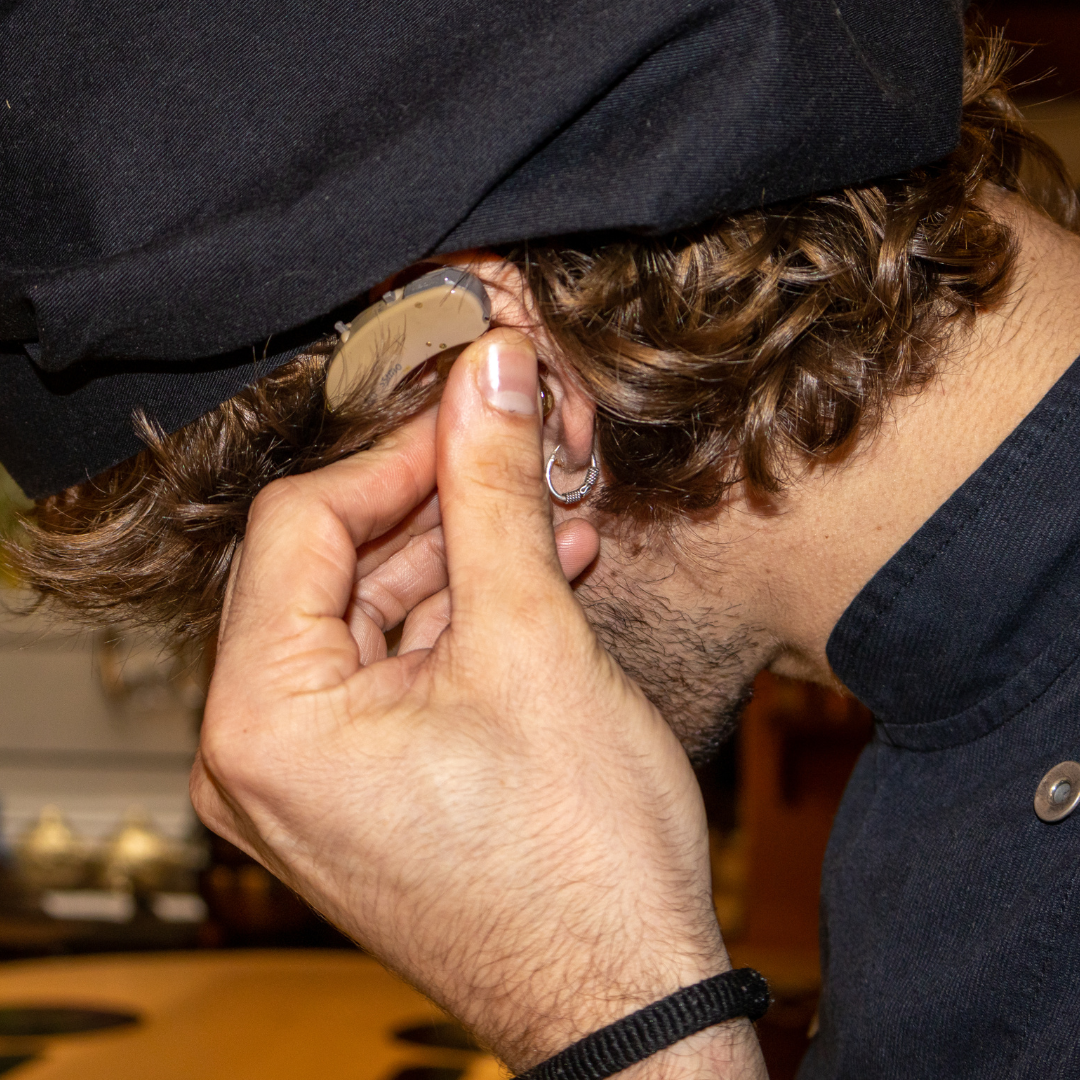
Active restaurant conversations are frequently hard to decipher when surrounding background noise clashes with your hearing. Our audiology clinic conducts specialized testing to evaluate hearing in both quiet sound booths and noisy simulations to isolate the underlying cause. As soon as we identify the physiological cause of your difficult hearing, we deliver personalized rehabilitation options.
Explaining Normal Quiet Hearing Versus Restaurant Listening Fatigue
Calm domestic settings establish a positive signal-to-noise ratio, allowing target speech to stand out clearly from faint background noises. Dining venues establish an entirely contrary auditory challenge. Competing conversations, background music, tableware clatter, and acoustic reflections clash with incoming speech, making auditory processing exceptionally strenuous.
This symptom pattern often reflects underlying high-frequency hearing loss, central processing dysfunction, or physiological aging of the auditory nerve. Visual limitations from low lighting, cognitive fatigue, and sitting farther away from conversational partners amplify speech degradation. It is common to display normal baseline audibility on conventional hearing tests while failing comprehensive speech-in-noise testing. Difficulty in restaurants deserves evaluation even when everyday hearing seems normal.
How Is High-Frequency Hearing Loss Diagnosed?
We initiate evaluation by exploring challenging acoustic environments, acoustic trauma history, subjective tinnitus, prescription drug profiles, and unilateral ear changes.
Through pure-tone audiometry, we determine your faintest auditory perception across low to high pitches utilizing both air and bone conduction testing. High-frequency hearing loss commonly presents on the audiogram as a characteristic precipitous drop in the higher frequency ranges. Comprehensive evaluations frequently include impedance tympanometry to examine middle-ear function and recorded word-recognition testing to measure speech understanding.
Since sound-treated booths cannot replicate the chaos of a crowded dining room, speech-in-noise testing provides critical real-world insight. This diagnostic protocol measures your capacity to understand target words or sentences against progressively louder multi-talker babble. Collectively, these evaluations clarify if your challenges relate to raw audibility, phonetic clarity, signal-to-noise processing, or compound factors.
How Do Auditory Processing Disorders Affect Hearing in Adults?
Auditory processing disorders interfere with the brain’s ability to process and decipher acoustic signals arriving from the ears. The physical ear mechanisms may capture tones correctly, but the central brain pathways struggle to filter competing inputs, parse similar consonants, or interpret rapid speech. Our clinical team starts by examining peripheral auditory thresholds, subsequently deciding if an auditory-processing test battery or multidisciplinary consultation is necessary.
How to Improve Speech Clarity in Challenging Acoustic Environments
Targeted behavioral changes optimize the acoustic speech signal reaching your auditory system while providing clear visual context. Prior to dining, choose venues known for lower noise levels or schedule meals during quieter dining hours. Establishments designed with high-walled booths, acoustic wall treatments, heavy fabrics, and carpeting reduce reverberation far better than modern industrial spaces with bare surfaces.
In-venue communication guidelines:
- Ask for seating positioned far away from open kitchens, noisy bar areas, ceiling speakers, and large parties.
- Choose a seat with your back against a solid wall to block acoustic clutter originating from behind.
- Seat yourself facing conversation partners under clear, bright lighting to facilitate visual speechreading.
- Keep conversational proximity as close as comfortably feasible to preserve acoustic signal strength.
- Place your better-hearing ear toward the person you most want to hear.
- Ask speakers to reword the specific phrase you missed rather than repeating their initial wording.
- Actively confirm key information rather than smiling and guessing at ambiguous dialogue.
- Allow yourself a short listening respite when auditory concentration starts to feel drained.
- Request that dining partners articulate words distinctly at an unhurried, natural speed.
- Raised or shouting voices warp acoustic phonetics and rarely improve speech intelligibility.
Assistive Listening Technologies for Noisy Environments
Determining the proper hearing technology hinges on the underlying disorder, everyday listening environments, and whether peripheral hearing loss is diagnosed. Modern clinical hearing aids integrate directional microphone polar patterns, automated digital noise suppression, and personalized restaurant memory settings to highlight frontal speech and reduce background competition. Maintaining realistic expectations remains essential, as no auditory device can isolate conversation by removing all surrounding voices.
Remote wireless microphones offer an exceptional boost to the signal-to-noise ratio in challenging venues. The microphone is placed near or worn by the speaker and sends that voice directly to compatible hearing aids or another receiver. This wireless transmission substantially diminishes the acoustic degradation caused by physical distance and ambient room noise.
Additional effective assistive technologies include:
- Omnidirectional table microphones designed for group dining tables
- Integrated telecoil programs for tapping into venue-wide induction loop systems
- Mobile speech-to-text applications delivering instant visual captions during dinner
- Smart earbuds offering dedicated speech-in-noise amplification settings
- Sound-level or restaurant-review tools for finding quieter locations
We will help compare available technology, verify device compatibility, and instruct you on utilizing your selected hearing equipment.
How an Audiologist or Physician Can Improve Hearing in Noise
A professional clinical assessment moves beyond basic baseline statements like “I hear fine in quiet rooms.” Our audiology team assesses the unique environments, speaking partners, and ambient noise profiles that challenge you to choose targeted diagnostic tools. Your comprehensive workup may involve pure-tone hearing thresholds, middle-ear testing, recorded word recognition, and speech-in-noise measures. Advanced auditory-processing testing can be introduced whenever medical history and baseline assessments justify specialized evaluation.
Sudden, one-sided, or rapidly worsening symptoms may require medical evaluation by an ear, nose, and throat physician. Comprehensive clinical care targets the physiological roots of hearing difficulties rather than simply writing them off as bad restaurant acoustics.
Schedule a Diagnostic Hearing Evaluation Right Away
If restaurant conversations leave you guessing, withdrawing, or feeling exhausted, schedule a comprehensive hearing evaluation with us. Our specialists can introduce effective interventions to support your hearing in noisy environments via precision hearing aid fittings, assistive devices, or audiological rehabilitation.
Contact our audiology office today to schedule your evaluation and move toward effortless, confident conversations.