Remember the last prescription drug commercial you watched on television? A surprising amount of airtime is spent listing side effects and yet, how many of us concentrate on reading the fine print tucked inside our pharmacy bags?
One side effect that often goes unmentioned is ototoxicity, the tendency for certain medications to harm the inner ear and potentially lead to hearing loss, ringing in the ears (tinnitus), or dizziness. This term, unfamiliar to many, literally means “ear poisoning,” combining “oto” (ear) and “toxic” (poisonous). It’s more common than most people realize and, when identified early, more manageable. In fact, over 100 classes of medications used to treat pain, infections, cancer, heart disease, and kidney disease can damage the inner ear’s delicate hair cells, often permanently.1
Inside your inner ear, thousands of tiny hair cells act as microscopic sensors which convert sound vibrations into signals your brain processes as speech, music, and voices of loved ones. Certain medications, while flowing through the bloodstream, may damage these cells. Once lost, hearing sensitivity does not regenerate, so hearing cannot be naturally restored.
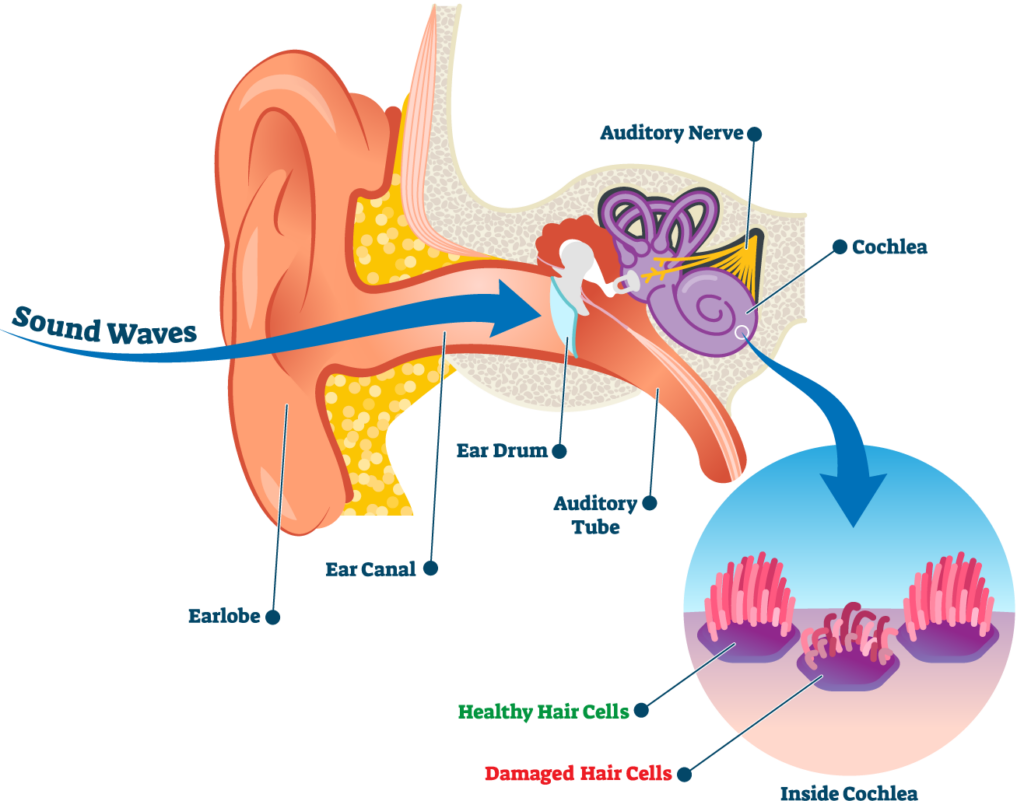
Part of what makes ototoxicity easy to miss is that routine hearing checks are not yet standard of care in most healthcare visits. Symptoms can be subtle or delayed, sometimes appearing years after exposure. Because of this, gradual changes are often mistaken for normal aging. Once belatedly discovered, damage may be irreversible.
Commonly used medications associated with ototoxicity include:
- Pain relievers such as aspirin and NSAIDs (ibuprofen, naproxen)
- Antibiotics, including neomycin and streptomycin
- Loop diuretics used for blood pressure and fluid management
- Chemotherapy agents, particularly cisplatin and carboplatin
- Some pharmacologic treatments for heart and kidney disease2
Taking these medications does not automatically mean harm will occur. Dosage, duration, and individual health factors all play a role. This is precisely why open conversations with your healthcare team and us matters so much.
While ototoxicity can affect anyone, vulnerability may be higher for:
- Older adults whose inner ears may already show age-related changes
- Those undergoing chemotherapy, especially cisplatin-based treatment
- Individuals managing chronic conditions requiring long-term or high-dose medications
- People with existing hearing loss, high blood pressure, or kidney disease
- Anyone taking multiple medications at the same time
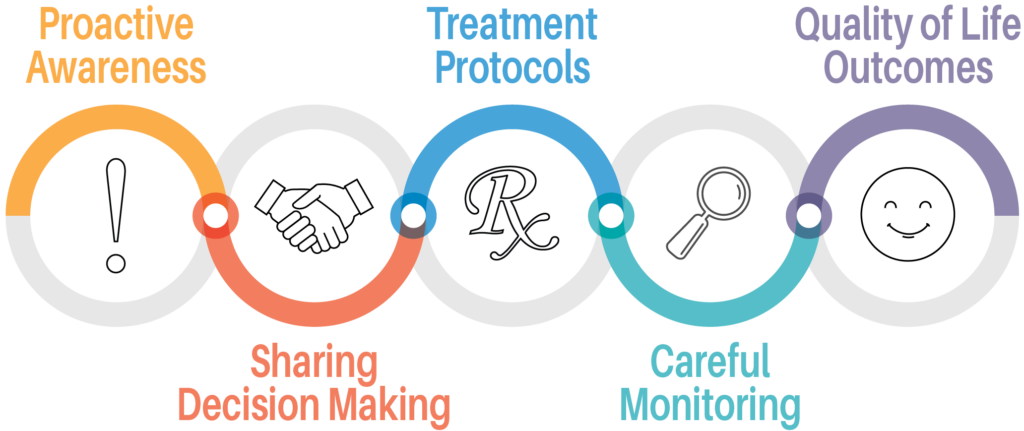
Knowing risks is the first step, but taking advised actions is crucial. We strongly recommend that you consider these healthy steps:
- Get a baseline hearing evaluation
- Talk with your healthcare providers
- Schedule regular check-ins
- Don’t wait for symptoms
- Bring a loved one
Proactive and knowledgeable paths forward can be simpler than it seems and start with well-informed and purposeful actions:
Your hearing is worth protecting at every stage of life and you don’t have to navigate this alone. Whether you’re taking medications with potential risks, supporting a loved one, or simply want to establish a baseline, we’re here for you. Your hearing health matters and we’re honored to be part of that conversation.
1 American Academy of Audiology Position Statement and Clinical Practice Guidelines Ototoxicity Monitoring. audiology.org 2009
2 Ototoxic Medications, Drugs that can cause hearing loss and tinnitus. League for the Hard of Hearing 2000