During May’s National Speech-Language-Hearing Month, we want to have one of the most important conversations in hearing care, the one about why so many people wait an average of 7 to 10 years before seeking help for hearing loss they already notice. 1
Because hearing loss often develops gradually, many people adapt to it before realizing how many meaningful sounds they are missing. Over time, their new normal can make it easy to put off necessary care, especially when the real barrier is not awareness, but the quiet weight of stigma. Understanding what truly holds people back is integral to changing it and compelling research tells a potentially life-changing story.
Just as we schedule annual checkups for our eyes and don’t think twice about wearing glasses, our ears also deserve routine attention. The evidence is clear that lack of awareness is not the only barrier to hearing care.
Far too few people get the audiological care they need
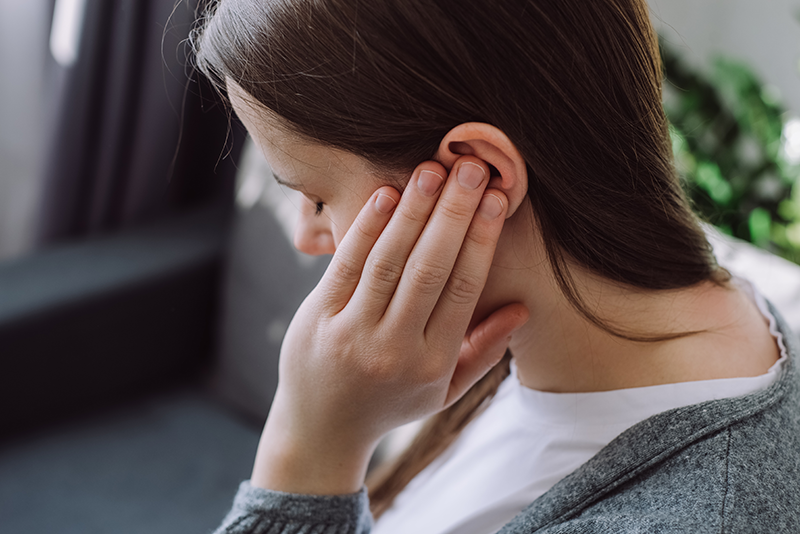
Only 16 to 30% of Americans who could benefit from hearing aids actually use them, meaning the vast majority of people who need help are not yet seeking it. 2
Nearly half of hearing-impaired people feel the stigma

A survey found that 48% of hearing-impaired people believe hearing aids carry a social stigma rooted primarily in a fear of appearing old or incapable. 2
The fear of standing out is real and common

Researchers coined the “crowded room effect” to describe the fear of being perceived differently in social settings. As more people embrace hearing care openly, that stigma naturally fades and seeking help becomes an act of courage, not something to hide. 2
Hearing happens in the brain, not just the ears. Your ears are sensitive microphones, but your brain is the mixing board, interpreting and giving every sound deeper meaning. When hearing capacity is reduced, the brain works harder to process speech, which may lead to mental fatigue, chronic frustration, and social withdrawal.
Your circle of life deserves a hearing care team who combines expert evaluation with genuine compassion. At Theos Audiology Solutions, communication wellness is not just what we do, it is our life’s work. With continuing education and years of clinical experience supporting individualized treatment plans, count on us.
Please reach out to schedule your personal consultation and invite a loved one to join you. While April’s showers bring May flowers, your life’s soundtrack can come into full bloom. Shall we get started?
1Saunders, G. H., Frederick, M. T., Silverman, S. C., Penman, T., Gardner, A., Chisolm, T. H., Escabi, C. D., Oree, P. H., Westermann, L. C., Sanchez, V. A., & Arnold, M. L. (2018). Hearing screening in the community. Journal of the American Academy of Audiology, 30(2), 145–152.
2 Madara, E., & Bhowmik, A. K. (2024). Toward alleviating the stigma of hearing aids: A review. Audiology Research, 14(6), 1058–1074.