Sound dampening can be unsettling, often making you feel separated from the community around you. Many people immediately worry they’re experiencing irreversible hearing loss when, in reality, the cause may be something much simpler: earwax buildup.
Knowing how to identify these differences ensures you obtain the correct treatment, whether that is safe cerumen extraction or a diagnostic hearing test. There is no need to feel stressed if auditory inputs seem dampened. A professional assessment will provide the final answer, but the following guide outlines the main differences between wax-related issues and lasting loss.
Recognizing Cerumen Blockage Symptoms
Cerumen (cerumen) is a normal, protective substance that helps capture dirt and debris and keeps the ear canal functional. The difficulty begins when this material accumulates to the point of a physical obstruction.
Typical indicators of an impaction include:
- A noticeable decrease in hearing level
- A feeling of fullness or clogging in the ear
- Ear discomfort or mild pain
- Ringing in the ear (tinnitus)
- Sound sharpness that changes or improves momentarily with jaw movement
Earwax-related hearing issues are often asymmetrical, impacting one ear rather than the other. The good news is that clinical clearance usually ends in an immediate restoration of your original hearing capacity.
How Hearing Impairment Typically Presents
Hearing loss, especially age-related or trauma-based hearing loss, tends to progress slowly and doesn’t improve when the canal is cleaned.
Common indicators of permanent hearing impairment include:
- Difficulty comprehending speech, especially in loud environments
- Often needing repetition during normal dialogue
- Increasing the TV or smartphone audio louder than others prefer
- Trouble detecting high-pitched sounds
- Hearing uniformly reduced in both ears
A key difference is that true loss lacks the physical “plugged” feeling that accompanies an earwax impaction.
Primary Distinctions at a Glance
Several fundamental signs can help you ascertain whether you are contending with a manageable obstruction or a more permanent shift:
- Timing: Cerumen blockages often come on abruptly; hearing loss develops slowly
- Resolution: Cerumen hearing changes are typically brief; auditory impairment is often irreversible
- Markers: Fullness points to a blockage; difficulty with speech clarity points to impairment
- Symmetry: Blockages are often asymmetrical, but permanent loss is commonly two-sided
Why Professional Intervention is Crucial
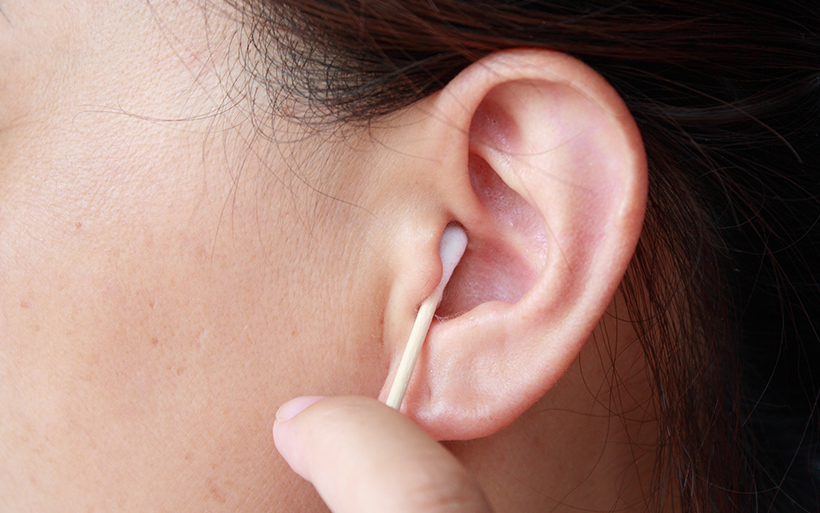
It’s tempting to assume earwax is the culprit — and grab for Q-tips or store-bought kits. In reality, manual poking often compacts the wax further against the eardrum, making the impaction worse.
Based on data from the National Library of Medicine, placing items into the ear canal increases the risk of impaction and trauma.
In the same way, ignoring initial hearing loss can delay treatment that assists in maintaining communication, safety, and quality of life.
Ways a Professional Exam Helps
A clinician can use an otoscope to immediately see if a mechanical blockage is visible.
If wax is found, clinical extraction often clears signs on the spot.
If no cerumen is found, a diagnostic hearing test will be used to identify the nature and degree of any hidden loss.
Medical authorities advise obtaining a clinical evaluation as promptly as you observe hearing changes that impact your lifestyle.
Final Thoughts on Earwax and Auditory Health
Muted sound is hardly a definitive marker of chronic loss.
It is frequently the case that a basic, resolvable obstruction is the source of the issue.
Obtaining professional attention guarantees you find the specific cause and the right solution for your hearing needs.
Remember: The sole accurate way to distinguish the distinction between cerumen impaction and hearing loss is with a professional evaluation.
Locating the cause soon safeguards your well-being and provides you with the comfort you have earned.
If you’ve noticed a shift in your auditory ability, call our office for a formal assessment today.