New Discoveries, You Should Know.
Throughout your Better Hearing is Better Healthcare journey, we are holistically dedicated to empowering you in making well-informed decisions. Since learning how medical conditions relate to one another is often complex, real world stories are insightful teachers, especially with auditory function a keen indicator of body system health.
Meet Linda, a 50-year-old patient with an active lifestyle, who came in last year for her annual hearing check. During the health history update, her recent kidney disease diagnosis came to light. Despite daily frustrations with communication challenges, little did she know about its potential connection to gradual hearing loss. After raising awareness of this causal link, Linda’s Care Team, including her hearing care professional, nephrologist and primary care Doctor, harmonized clinical efforts.
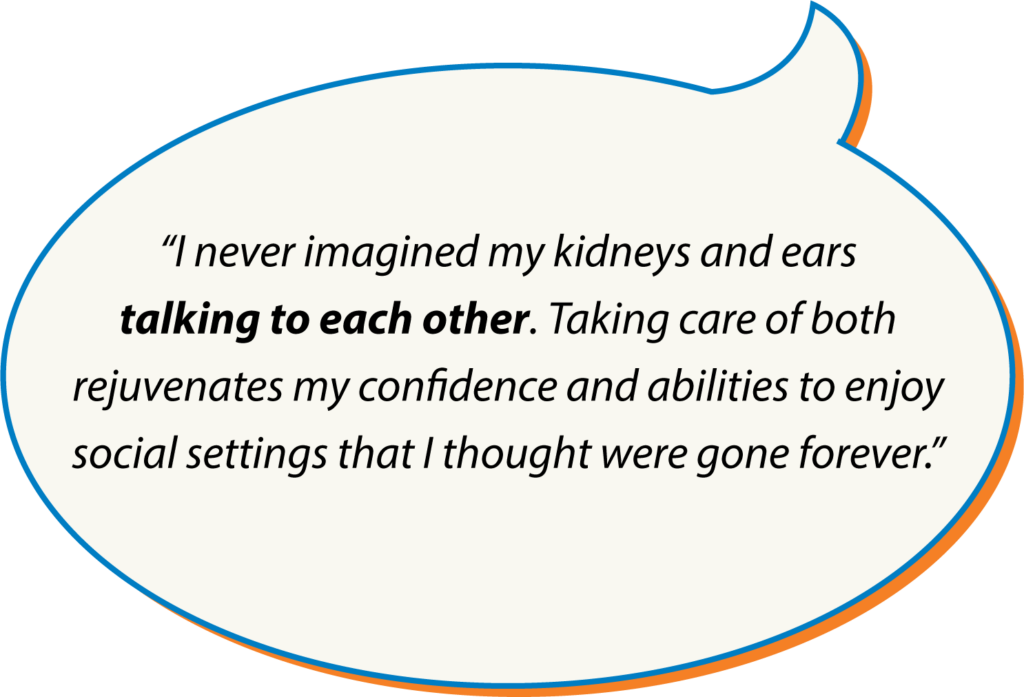
Over the following months, benefitting from coordinated medical expertise, she noticed better hearing clarity in group settings, an aspiration she previously felt hopeless. In her own words:
Your Body’s Filtering Systems: Working in Harmony
Think about morning coffee routines. Your coffee filter keeps the grounds out while letting flavorful liquid flow through. Similarly, your body has two crucial filtering systems: while kidneys filter waste from your blood, inner ears with tiny blood vessels filter incoming auditory stimulus to make sense of life’s soundtrack. By protecting one filter, you often improve the other’s functionality. It is this fascinating connection you should know more about.
Straight from essential research: “Hearing loss affects nearly 1.6 billion people and is the third-leading cause of disability worldwide. Chronic kidney disease (CKD) is also a common condition associated with adverse clinical outcomes and high health-care costs. From a developmental perspective, the structures responsible for hearing have a common origin with the kidney, and genetic abnormalities that cause familial forms of hearing loss can also lead to kidney disease.
“These theoretical considerations are supported by data demonstrating that CKD is associated with a graded and independent excess risk of sensorineural hearing loss.” 1
Back to our Story…
Family Matters: It’s in Your Genes
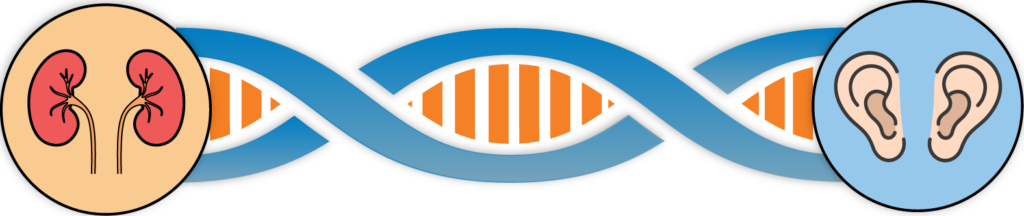
Linda was surprised when she and her sister developed comparable hearing and kidney issues despite living very different lifestyles. This illustrates what the aforementioned research suggests, that some inherited traits affect both systems. Certain genetic factors influence both how your kidneys filter blood and your inner ears process sound. This helps describe why, sometimes, these dual chronic conditions run in families.
Now that you know, what should you do?
Taking your Quality of Life goals personally, we strongly recommend (like Linda and her sister did):
Promptly schedule expert evaluations of your auditory and kidney functions.
Learn more about your family’s medical history to proactively identify genetic cues.
Consider starting a health journal to track your hearing challenges, water intake and energy levels.
Now that you know, who do you know?
Do you have chronic kidney disease or know anyone receiving dialysis treatment? Please see us or encourage them to get periodic evaluations to accurately assess the type and degree of hearing loss.
1 Greenberg, D., Rosenblum, N. D., & Tonelli, M. (2024). The multifaceted links between hearing loss and chronic kidney disease. Nature Reviews Nephrology, 20(5), 295–312. https://doi.org/10.1038/s41581-024-00808-2